
Pool renovations and remarbeliting in Cape Town
Most pools that look tired are structurally sound and need a new finish. Some are losing water, and a new finish over an unresolved leak is money spent twice. The order of work is therefore always the same: find out what the shell is actually doing, fix that, and only then re-surface. Renovation covers remarbeliting, retiling, leak detection and repair, coping replacement and bringing old plant rooms back to working order.
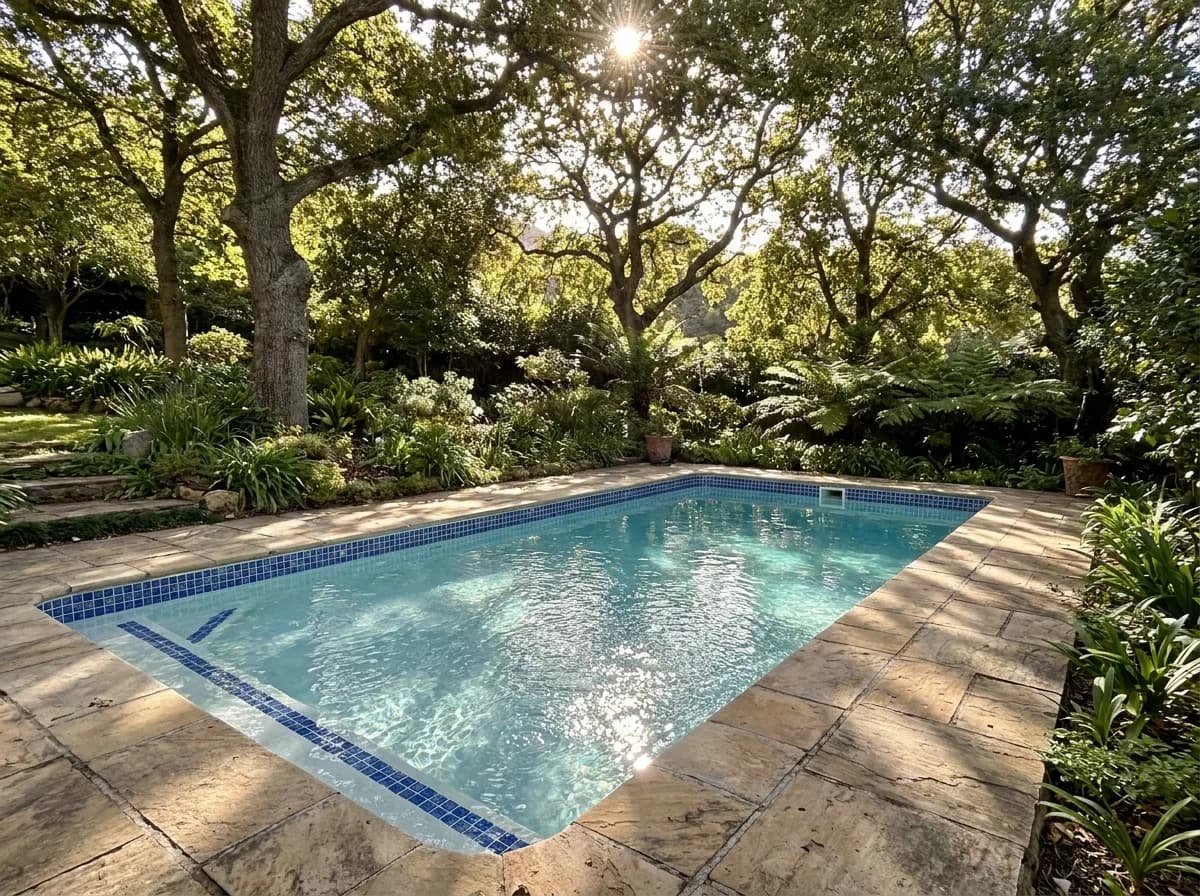
Why the diagnosis comes before the quote
A rough, patchy or stained surface and a pool that is quietly losing water can look identical from a deckchair. They are not the same job. Re-plastering over a live leak buries the problem under a new finish and it comes back, usually within a season or two, and by then the new surface is part of what has to come off again.
So the first question is whether the pool is holding water. A bucket test will tell you something over a couple of days, but it will not tell you where the water is going. Losses through the shell, through the plumbing lines, through the light housing and through the skimmer throat all present the same way to the owner and are four different repairs.
Only once that is settled is it worth talking about finishes — because the answer changes the scope. A shell with movement cracks needs those addressed structurally first. A shell that is simply worn needs preparation and a new surface and nothing more.
Remarbelite, and what it does not fix
Remarbeliting means stripping the old plaster back, preparing the shell and applying fresh marbelite. Done properly it is not a coat of paint over the old surface — the existing finish comes off, because a new layer bonded to a failing one fails with it.
It is the right answer for a surface that has gone rough underfoot, lost its colour, stained, or started to shed. It resets the pool to something you want to swim in, and on a shell in good condition it is the most cost-effective renovation available.
It is the wrong answer, on its own, for a pool that is moving, leaking or has a compromised shell. Marbelite is a finish, not a structure. If the concrete underneath has a problem, the plaster over it will show that problem again.
Retiling, coping and the parts people notice
A mosaic or tiled waterline is where a pool shows its age first, because that band takes the worst of it — sun, splash, chemical concentration and the mineral line that forms right at the surface. Replacing just that band changes how the whole pool reads for a fraction of what a full retile costs.
Coping is the other one. It is the edge you sit on, put your hands on and walk around, so cracked, lifted or spalled coping is felt as well as seen. It is also functional: the coping sheds surface water away from the shell, and when it fails it starts letting water in behind the pool rather than into it.
Older pools frequently have a plant room that has quietly become a museum. Pumps sized for a different pool, filters past their useful life, and a chlorinator nobody has serviced in years. It is worth assessing at renovation time, because that equipment determines what the water is like to live with once the new finish is on.
The guarantee on renovation work
Structural work carries the same ten-year structural guarantee as a new build, with one year on equipment and workmanship, backed by the manufacturer warranties on pumps and filters. It is registered in writing at handover rather than promised verbally.